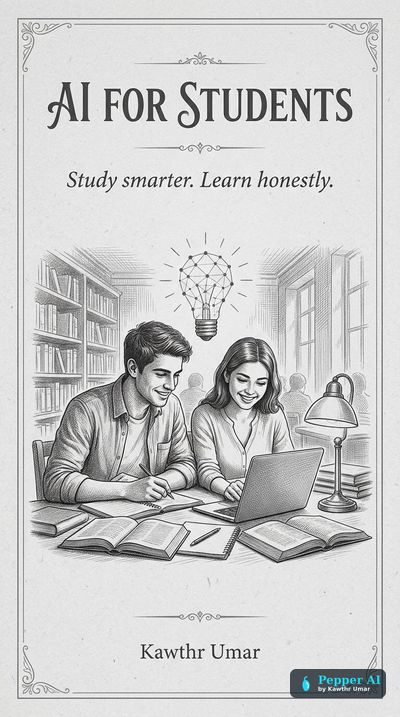
AI can help you learn faster by explaining topics in simple words and creating practice questions. It works best as a tutor, not as a shortcut. Use it to understand, then test yourself without looking at the answer.
Start each study session with a clear goal, such as “explain photosynthesis simply, then quiz me with five questions”. Clear requests produce clearer help.
2. Explain It Another Way
If a textbook paragraph confuses you, paste it in and ask for a simpler version, an example, or an analogy. You can ask the same question three different ways until it clicks.
Then explain the idea back in your own words. If you can teach it, you understand it, and the tool can tell you what you missed.
3. Practice Questions and Flashcards
Ask the tool to create ten practice questions on a topic, with answers at the end. Try to answer before checking. Mistakes show exactly where you need more revision.
You can also turn your notes into flashcards. Review them in short sessions across several days, because spaced practice helps memory more than one long night of cramming.
4. Writing Help, Not Writing for You
AI can suggest outlines, check grammar, and point out unclear sentences. It should not write your assignments for you. Your teacher wants to see your thinking, and you only learn by doing the work.
Write your first draft yourself, then ask for feedback: “What is confusing in this paragraph?” Apply the advice in your own words.
5. Check Facts and Be Honest
AI can make mistakes and invent facts or sources. Always verify important information in your textbook or a trusted website. Never copy an answer without understanding it.
Follow your school’s rules about AI. If you are unsure whether something is allowed, ask your teacher. Honesty protects your learning and your reputation.
6. Plan Your Revision
Tell the tool your subjects, exam dates, and free hours, and ask for a weekly revision timetable. Adjust it to your real energy levels and keep time for rest and sleep.
Review your plan every Sunday. Move missed sessions to another day instead of giving up. A flexible plan you follow is better than a perfect plan you ignore.